HRMS Software for Free Zone Companies in the UAE
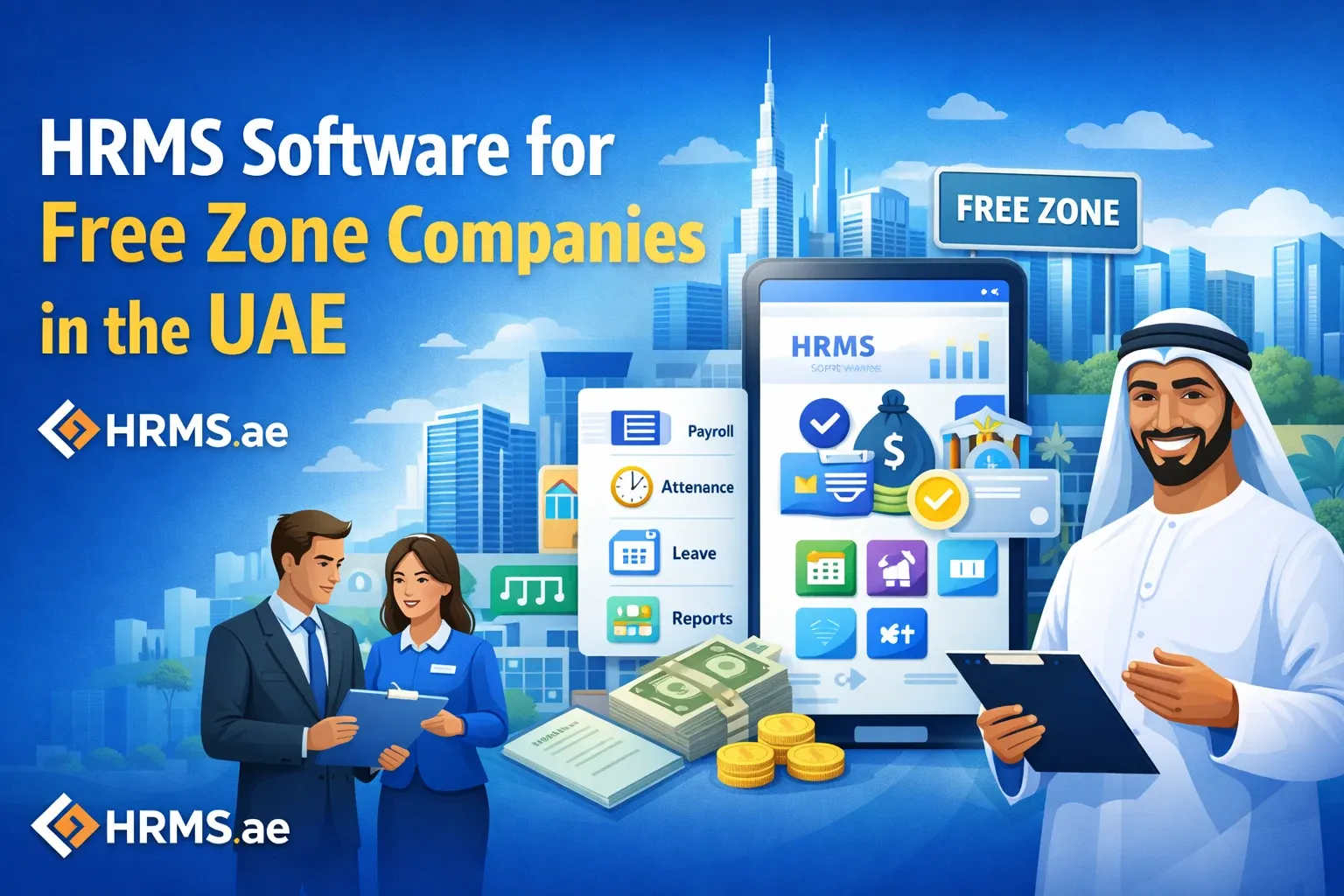
Free zones in the United Arab Emirates work like the engine of the country’s fast-moving commercial expansion. The UAE hosts more than 40 multidisciplinary free zones that collectively attract global investors and talent, and regulators keep updating processes to match that growth.
For HR teams inside free zones, the result is pretty straightforward. Here, paperwork becomes a strategic risk. Recruitment cycles are faster, visa renewals are strict, payroll rules have tightened, and auditors expect precision. So, trying to run pay, visas, leave, and compliance across multiple platforms or spreadsheets wastes time and invites mistakes. That’s exactly why a modern HRMS Software matters, as it’s a tool that keeps operations running without struggling too much. The right HRMS turns compliance into an automated routine, and HR gets the headspace to think about people, not just forms.
| Key Takeaways UAE hosts 40+ free zones with 100% foreign ownership, and each needs clear, auditable HR processes. Major free zones and financial hubs are reporting strong company-registration growth. WPS and zone payroll rules require compliant payroll setups, such as automated payouts and records. Visa renewals demand document accuracy. |
What is a Free Zone in the UAE?
A free zone in the United Arab Emirates is a designated area where businesses can set up with far fewer complications than the usual mainland process, with 100% foreign ownership. Each zone has its own authority, its own rules, and its own way of helping companies get up and running without unnecessary steps.
They’re actually focused business neighborhoods built to support specific industries like technology, logistics, media, manufacturing, finance, and so on.
What companies usually appreciate about free zones is:
- Setting up a license takes less time.
- Foreign owners keep full control of their companies.
- Import and export rules are simpler.
- The administrative work goes through one authority instead of several.
But the part that really defines a free zone is the pace. Things here move quickly, and companies inside these zones have to keep up.
Where the Pressure Comes From
Free zones have specific administrative requirements. Some zones have already moved to Payroll Software that pushes companies to process salaries via formal channels. Free-zone authorities also require accurate document trails for visas and renewals, and some leading free zones are growing at rates that demand growing HR systems.
That means HR isn’t just handling people; it also handles legal timelines, cross-border talent logistics, and data that auditors will inspect. If you’re operating in a free zone and still rely on disconnected tools, you’re losing time and exposing the company to simple but costly mistakes.
The Changes You’ll Notice after an HRMS Rollout
After implementation, you won’t get “transformation” overnight, but these visible improvements arrive fast and stay:
- Faster onboarding: It helps new hires to complete forms and upload credentials before day one.
- Clean audits: Now every visa, contract, and ID is kept securely in one place with time-stamped activity.
- Accurate payroll: It calculates allowances, deductions, and gratuity according to UAE practices and zone rules.
- Predictable renewals: You’ll get automatic reminders to stop last-minute visa crises.
- Fewer routine queries: With the new system, employees can access payslips and leave balances themselves.
Actual success is measurable here:
- Reduction in manual HR tasks (requests & emails) by at least half within three months.
- Zero missed visa renewals after automation triggers.
- Payroll accuracy improved to the point where corrections and re-runs dropped to near zero.
- Faster hiring cycle times and better newcomer experiences.
What to Look for in an HRMS Software
If you’re choosing an HR system with time attendance, pick features that map to what free zones require and what your people actually use:
- Complete employee file: Make sure contracts, Emirates ID, visa copies, certificates, and renewal dates are properly stored and searchable.
- Attendance & leave tied to policy: Go for biometric or mobile attendance that feeds leave balances and overtime, matching zone-specific leave rules.
- UAE-compliant payroll: The software you choose must have salary structures, allowance handling, and gratuity calculation. Besides, it must be able to generate bank-ready or WPS-compatible outputs.
- Visa and PRO workflow: Your HR software must include renewal alerts, document checklists, and a single trail for all approvals.
- Employee self-service: It needs to help your employees with mobile access for payslips and requests, so the automation can cut back on routine HR questions.
- Insightful dashboards: Check if it has a dashboard with instant hiring, attrition, and payroll spend that leadership can act on.
A Few Tips for You to Stay Compliant
- Map your existing processes and document how an employee moves from offer to onboarding to payroll to visa renewal.
- Collect the top 10 documents auditors request and ensure each one has a single canonical location.
- Track payroll exceptions for three months. If you find repeated issues, then prioritize payroll automation first.
- Pilot employee self-service with a small team to measure the reduction in HR tickets.
- Choose a vendor that offers local support and understands UAE free-zone reporting. Local knowledge avoids costly customization later.
As we know now, free zone companies in the UAE operate in a fast, regulated, and talent-competitive environment. That’s why here, a modern HRMS is the operational core that prevents avoidable errors, keeps audits tidy, and gives your employees a better experience.